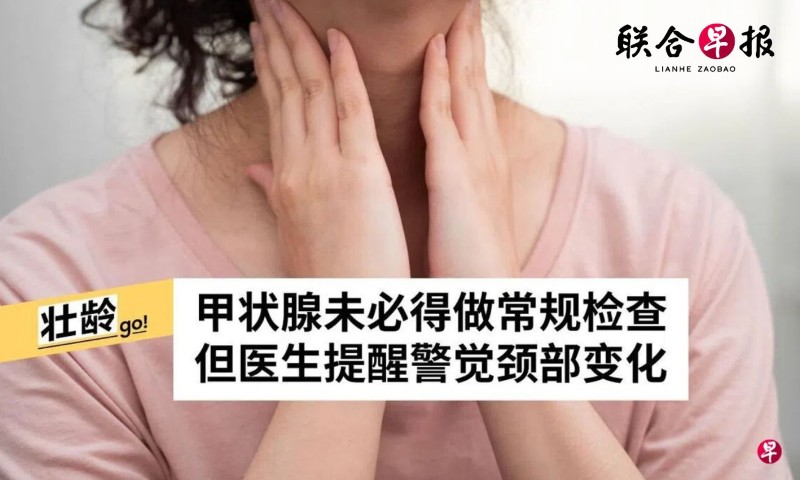
The following are key highlights from an article originally published in Chinese by Lianhe Zaobao (联合早报).
Thyroid cancer is one of the fastest-growing cancers worldwide, yet it remains poorly understood. Early-stage tumours often cause no noticeable symptoms and are frequently found by chance during a routine check-up or scan.
To mark International Thyroid Cancer Awareness Month this September, Dr Reyaz Singaporewalla, Senior Consultant Endocrine and General Surgeon at Ace Specialist Surgery and Endoscopy, shared some key insights with Lianhe Zaobao:
- Most neck lumps aren't cancer, but a lump that persists beyond 2–3 weeks, keeps growing, feels hard, or doesn't resolve after an infection clears should be checked by a doctor.
- Warning signs to watch for: voice changes, difficulty swallowing, persistent neck discomfort, or unexplained swelling of the lymph nodes. Thyroid cancer is often highly treatable, especially when caught early, and early cases are usually painless.
- Women are about 3x more likely than men to develop thyroid cancer, possibly linked to hormonal factors like oestrogen, but men can develop it too, sometimes at a later stage since they're less likely to seek care for a painless lump.
- Risk factors are less predictable than for other cancers. Smoking, alcohol, and diet aren't strongly linked. Prior head/neck radiation, family history, and certain genetic conditions are the clearest risk factors, though most patients have none of these.
- Routine screening isn't recommended for people without symptoms or risk factors, but staying familiar with your own neck and getting any new or persistent lump checked is key.
- Not every nodule needs surgery. Diagnosis first, then an individualised treatment plan. Modern options can include minimally invasive or scar-free procedures where appropriate.
For the full interview, including more detail on symptoms, causes, and screening, read the original article on Zaobao
Source: Lianhe Zaobao (联合早报), September 2026.