
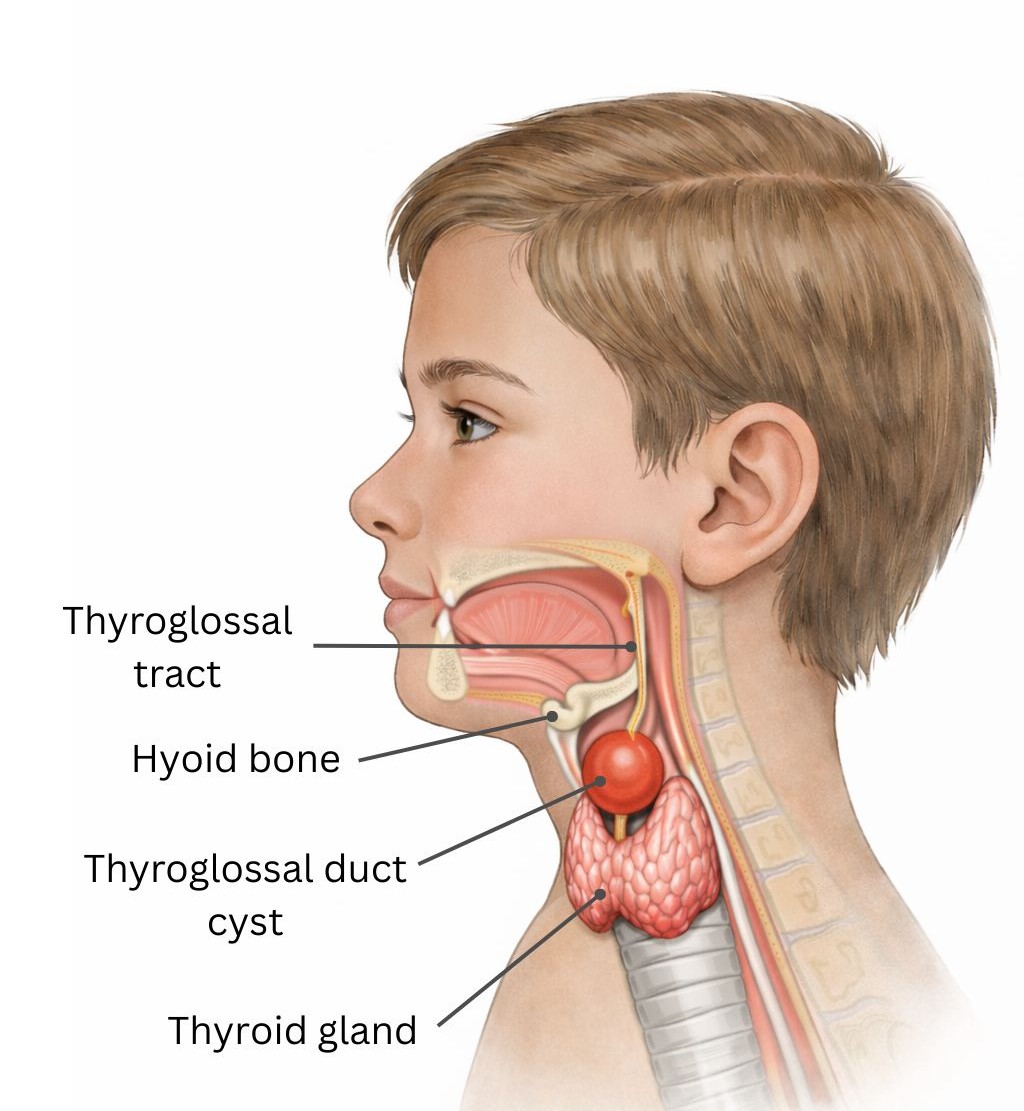
A thyroglossal cyst is a congenital, fluid-filled mass that develops in the midline of the neck. It is one of the most common neck masses seen in children but can also appear in adolescents and adults. The cyst forms from remnants of the thyroglossal duct, a narrow canal that develops during the formation of the thyroid gland in early fetal life.
During embryonic development, the thyroid gland begins at the base of the tongue and gradually descends to its final position in the lower neck. Normally, the thyroglossal duct disappears after development is complete. However, if portions of this duct persist, they can collect mucus or fluid and form a cyst.
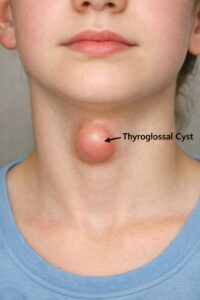
Thyroglossal cysts are generally benign and slow-growing. Many remain unnoticed for years until a visible swelling appears or an infection occurs. The mass typically moves upward when a person swallows or sticks out their tongue—an important clinical sign that helps distinguish it from other neck conditions.
Although the cyst itself is harmless, infections, inflammation, or rapid enlargement can cause discomfort or complications. In rare cases, malignancy (usually papillary carcinoma) can arise within the cyst, making proper evaluation essential.
Most patients in Singapore with a thyroglossal cyst experience mild or no symptoms unless the cyst enlarges or becomes infected. Common symptoms include:
Visible Midline Neck Swelling
Movement With Tongue or Swallowing
Pain or Tenderness
Difficulty Swallowing or Breathing
Diagnosis begins with a detailed medical history and a thorough physical examination. Doctors evaluate the swelling’s location, characteristics, and movement pattern.
Ultrasound is the most common and effective diagnostic tool. It helps determine:
Ultrasound is non-invasive, radiation-free, and widely used in both children and adults .
Although not always required, blood tests may include:
These tests ensure that the thyroid is functioning normally.
Advanced imaging may be considered when:
FNA biopsy is uncommon but may be used to:
Early diagnosis is important to ensure timely treatment and prevent complications such as repeated infections or fistula formation.
The Sistrunk operation is definitive treatment for thyroglossal cysts. It significantly reduces recurrence compared with simple cyst removal.
The surgery involves:
This comprehensive approach ensures that all tissue remnants are eliminated, reducing recurrence rates from up to 70% (simple excision) to less than 5%.
Surgery is indicated when:
Surgery is typically delayed until any acute infection is treated.
Observation may be considered if:
However, most specialists recommend definitive surgery to prevent future infections, enlargement, or complications.
Recovery after Sistrunk surgery is generally smooth, with most patients resuming normal activities within 7–10 days.
Stitches are usually removed within 5–7 days unless absorbable sutures are us
Although rare, potential complications include:
Most patients recover fully and experience excellent cosmetic and functional outcomes.
The long-term prognosis for patients with a thyroglossal cyst is excellent. Most patients:
In extremely rare cases where cancer is found within the cyst, additional treatment—such as total thyroidectomy or radioactive iodine—may be required. However, the prognosis remains highly favorable with timely intervention.

Copyright © ACE Specialist Surgery & Endoscopy | Terms & Conditions